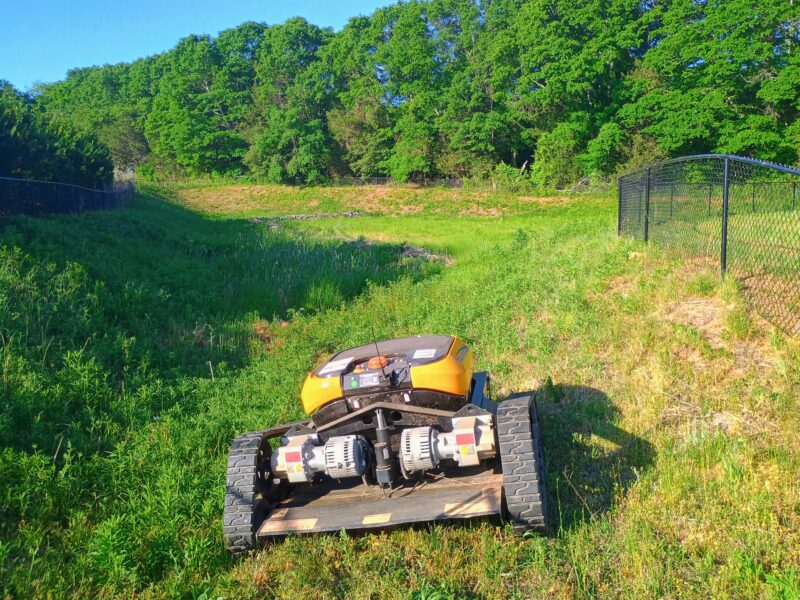
Steep Slope Mowing for Banks, Embankments & Hard-to-Reach Terrain in Upstate South Carolina
Maintain steep banks, retention ponds, and overgrown slopes safely with remote-controlled mowing built for extreme terrain. We eliminate the need for operators on dangerous slopes while delivering clean, consistent results where traditional crews fall short.
Where is slope mowing used?
Steep slope mowing is essential anywhere terrain makes traditional equipment unsafe, inefficient, or impossible to use.
Retention Ponds & Stormwater Basins
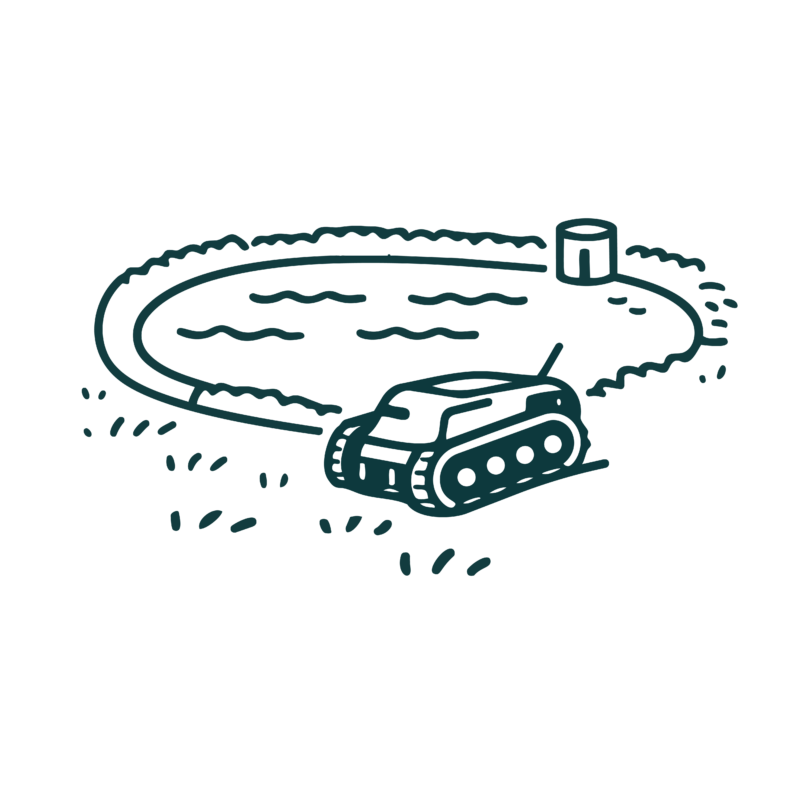
Maintain steep pond banks, basins, and water edges safely while keeping drainage areas visible and compliant.
Roadside Slopes & Right-of-Ways
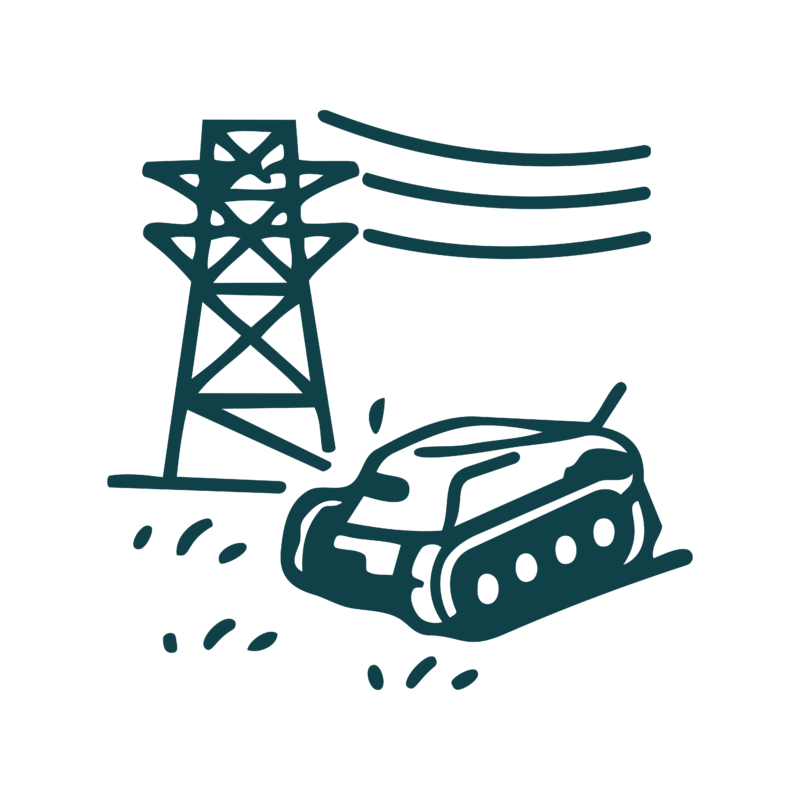
Control vegetation along highways, roads, and utility corridors where steep grades and limited access create safety risks.
Commercial & Industrial Properties
Keep large properties clean and professional by maintaining slopes, drainage areas, and hard-to-reach sections.
HOA Communities & Residential Developments
Prevent overgrowth, reduce pests, and improve the appearance of common areas with consistent slope maintenance.
Ditches, Embankments & Drainage Areas
Maintain flow and visibility by keeping drainage channels and embankments clear of heavy vegetation.
What is steep slope mowing?
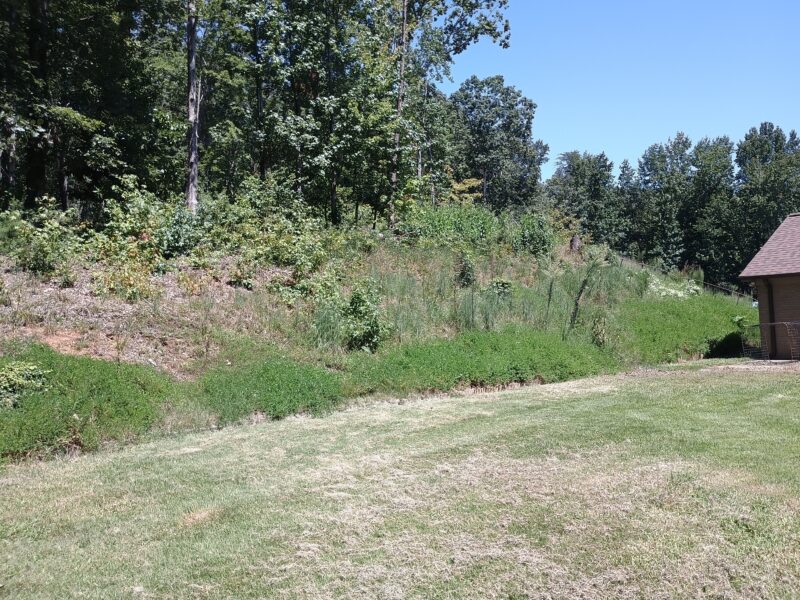
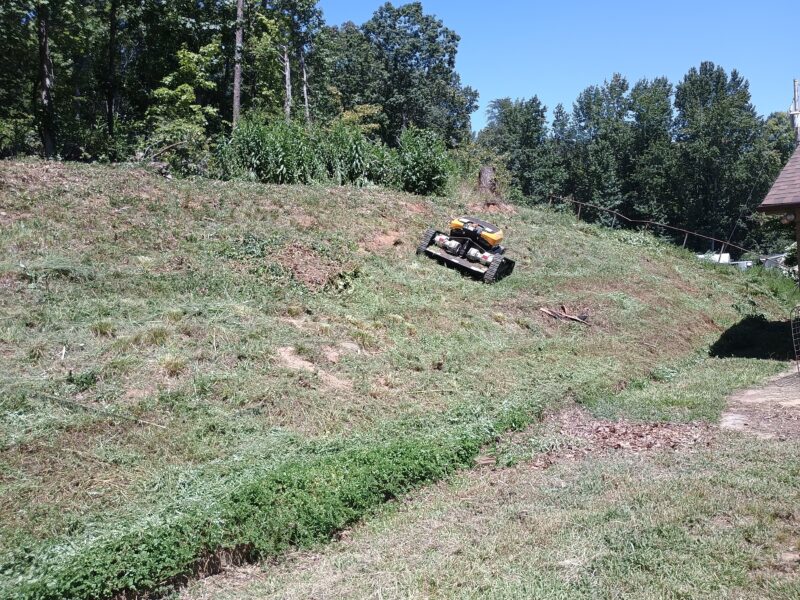
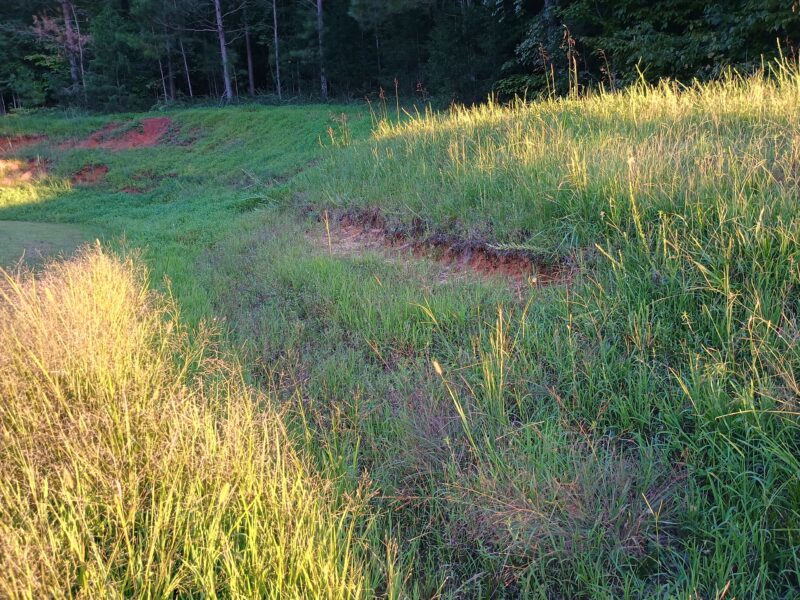
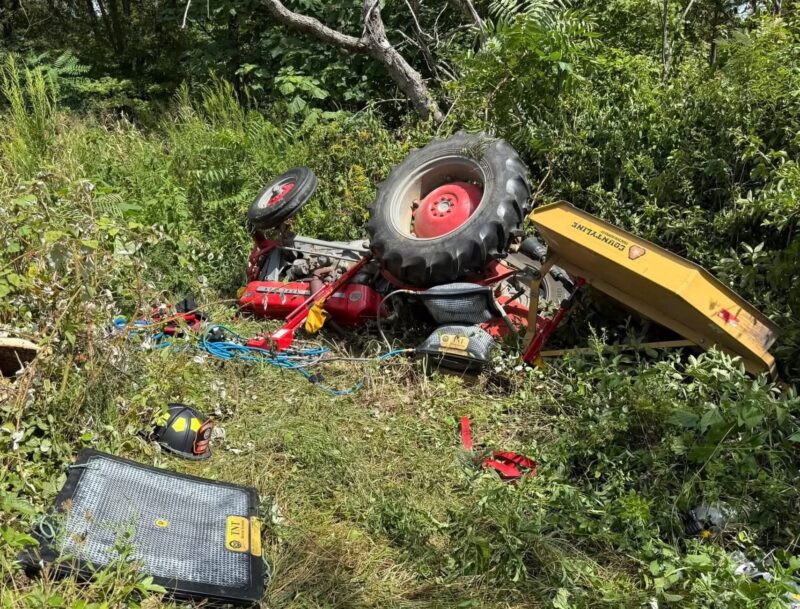
Steep slope mowing is specialty mowing on terrain that increases risk, limits traction, and creates rollover hazards for standard mowing crews. The goal is a controlled, consistent cut on slopes and uneven ground—without putting operators or property at unnecessary risk.
Why do standard mowers fail?
Standard mowers and typical crews are designed for flat lawns and gentle grades. On steep terrain, they often create:
Safety Protocols and Trained Operators
Safety-first Practices
Slope work requires a different standard than routine mowing. Our process emphasizes hazard control, equipment matching, and predictable execution.
Safety first practices include:
Equipment Built for Slope Work
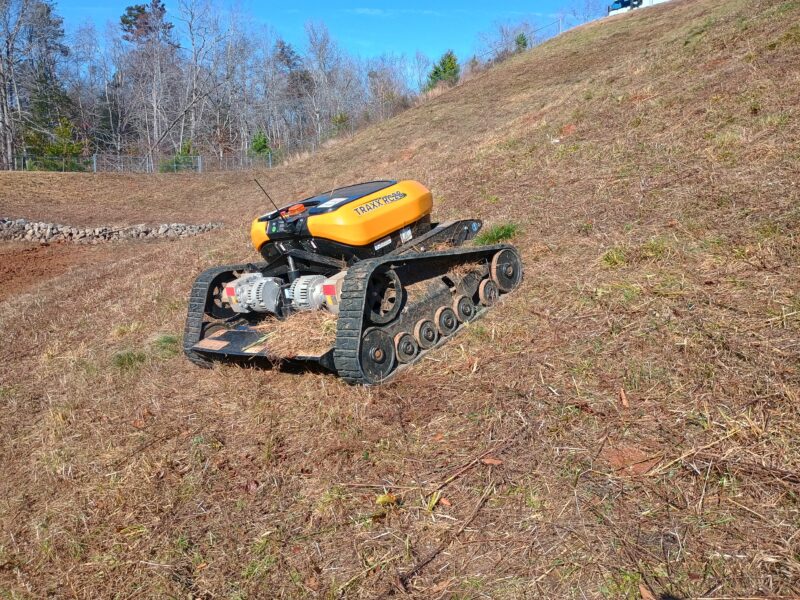
We use equipment configured for steep terrain and challenging access, including remote slope mowing capabilities where appropriate.
Capabilities may include:
(Equipment selection depends on terrain, vegetation type, and access requirements.)
Slope Mowing Questions (What Property Managers Want to Know)
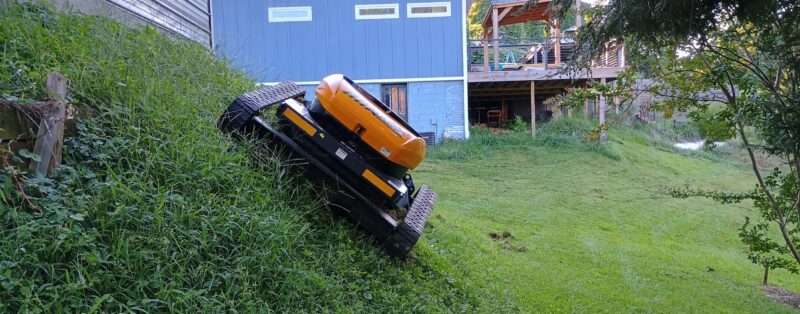
We can safely mow slopes up to 50 degrees using our remote-controlled slope mowers.
To put that into perspective:
- A 12:12 roof pitch (which most people recognize as very steep) equals about 45 degrees
- A typical staircase is around 30–35 degrees
That means we’re working on slopes steeper than a roof and significantly steeper than stairs—areas that are unsafe for traditional mowers or crews on foot.
Our remote-controlled equipment is specifically designed for these extreme conditions, allowing us to maintain steep banks, retention ponds, and embankments safely and consistently without risking people or property.
No. Our equipment is designed to minimize ground disturbance. The tracked system provides better weight distribution and traction, reducing the risk of rutting, sliding, or erosion compared to traditional equipment.
Most slopes require 2–3 cuts per year depending on growth conditions. Properties with heavy vegetation or previous overgrowth may require more frequent service initially to bring the area under control.
Slope mowing is commonly needed for retention ponds, drainage basins, roadside embankments, commercial properties, HOA communities, and any area with steep or hard-to-access terrain.
Slope mowing requires specialized equipment and techniques. Standard mowers struggle with traction and stability on steep or uneven terrain, while our remote-controlled machines are built specifically for these conditions, providing safer and more consistent results.
Yes. We use specialized remote-controlled slope mowers designed to handle slopes up to 50 degrees. This allows us to safely maintain areas that are too dangerous for traditional riding mowers or crews on foot.