
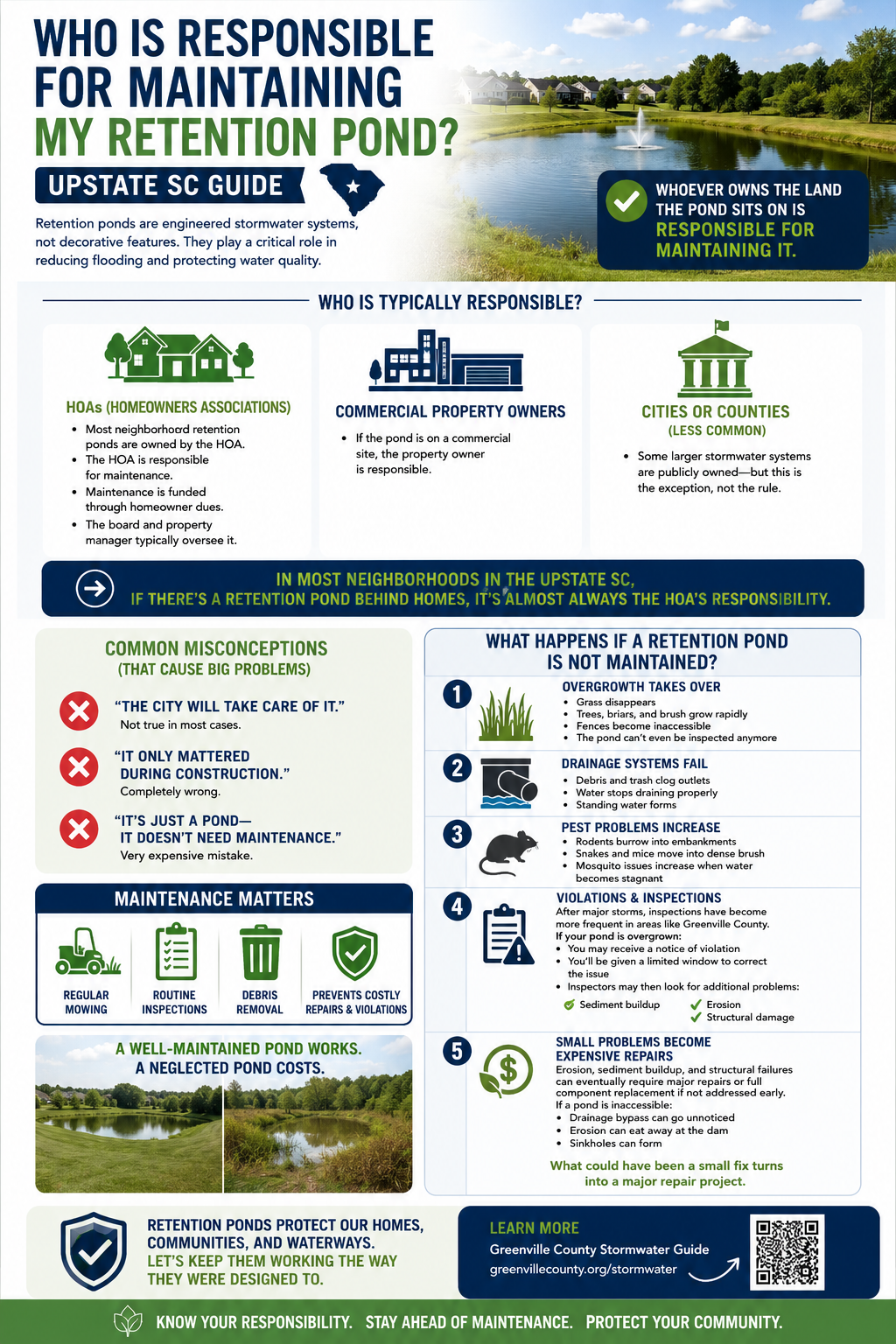
What Happens If You Don’t Maintain Your Retention Pond?
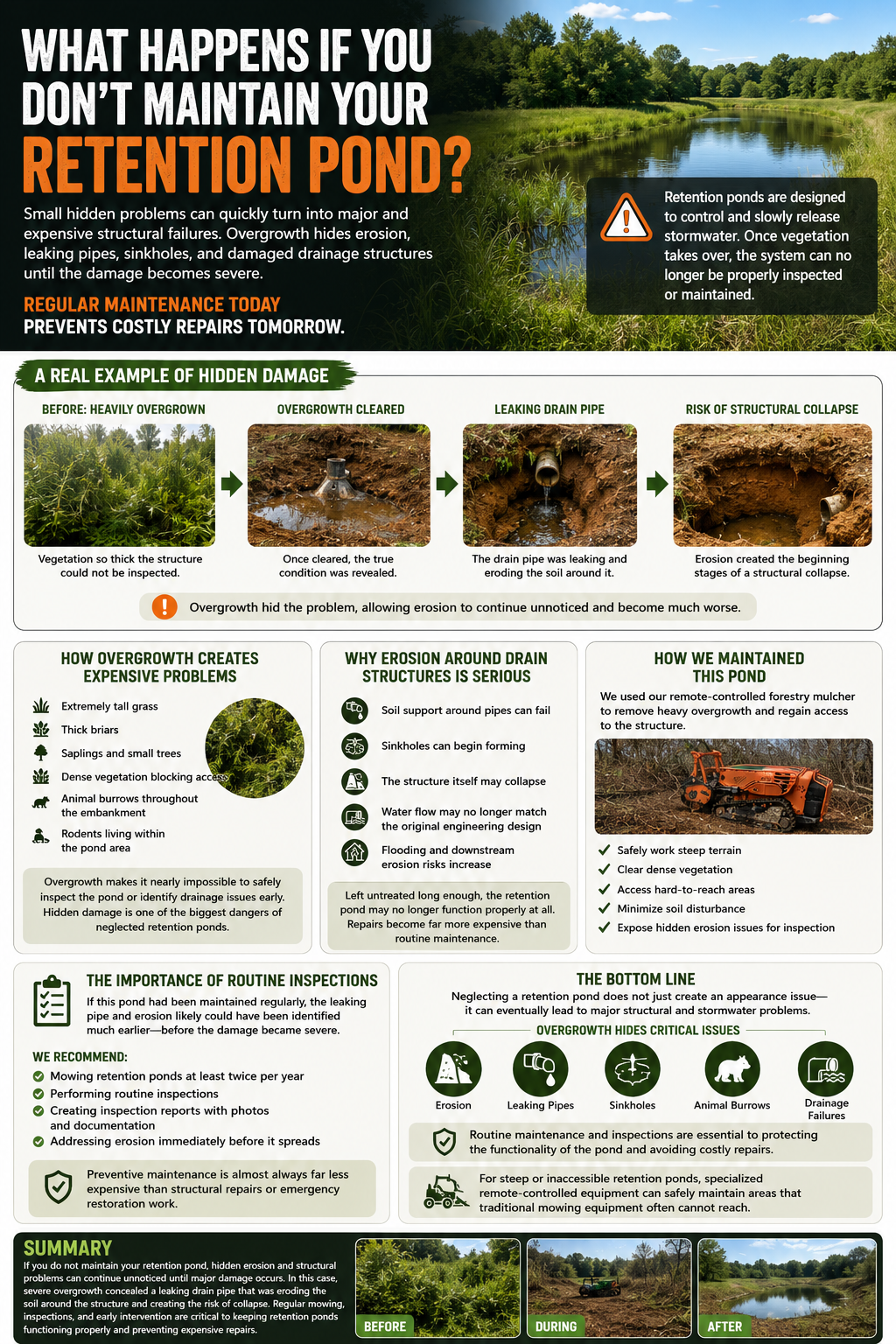
If a retention pond is not maintained, small hidden problems can quickly turn into major and expensive structural failures. Overgrowth can hide erosion, leaking pipes, sinkholes, and damaged drainage structures until the damage becomes severe. In many cases, property owners and HOAs do not realize there is a problem until repairs become extremely costly.
Regular mowing and inspections are critical because retention ponds are designed to safely control and slowly release stormwater. Once vegetation takes over, the system can no longer be properly inspected or maintained.
A Real Example of Hidden Retention Pond Damage
Recently, we worked on a heavily overgrown retention pond that had severe erosion issues around the drain stack. The pond had become so overgrown that the actual condition of the structure could not even be inspected properly.
Once the vegetation was cleared, we discovered that the drain pipe was leaking and actively eroding the soil around the structure. Over time, this caused the surrounding soil to wash away, creating the beginning stages of a structural collapse around the drain system.
Because the overgrowth hid the problem, the erosion continued unnoticed and became significantly worse before anyone could identify it.
How Overgrowth Creates Expensive Problems
This pond had:
- Extremely tall grass
- Thick briars
- Saplings and small trees
- Dense vegetation blocking access
- Animal burrows throughout the embankment
- Rodents living within the pond area
The vegetation had become so dense that it was nearly impossible to safely walk through the retention pond, inspect the structures, or identify drainage issues early.
This is one of the biggest dangers of neglected retention ponds: hidden damage.
Many property owners assume the pond is “fine” because water is still present. However, underneath the overgrowth, erosion and structural failures may already be developing.
Why Erosion Around Drain Structures Is Serious
The drain structures inside a retention pond are designed to slowly control water flow into nearby creeks and drainage systems.
When erosion develops around these structures:
- Soil support around pipes can fail
- Sinkholes can begin forming
- The structure itself may collapse
- Water flow may no longer match the original engineering design
- Flooding and downstream erosion risks increase
If left untreated long enough, the retention pond may no longer function properly at all.
At that point, repairs often become far more expensive than routine maintenance would have been.
How We Maintained This Pond
To safely reclaim this retention pond, we used our remote-controlled forestry mulcher to remove the heavy overgrowth and regain access to the structure.
Using specialized remote-controlled equipment allowed us to:
- Safely work steep terrain
- Clear dense vegetation
- Access hard-to-reach areas
- Minimize soil disturbance
- Expose hidden erosion issues for inspection
Once the vegetation was removed, the true condition of the pond became visible.
This is why specialized retention pond maintenance is very different from standard lawn care.
The Importance of Routine Inspections
One of the biggest lessons from this project is that retention ponds must remain accessible for inspection.
If the pond had been maintained regularly, the leaking pipe and erosion likely could have been identified much earlier before the damage became severe.
We strongly recommend:
- Mowing retention ponds at least twice per year
- Performing routine inspections
- Creating inspection reports with photos and documentation
- Addressing erosion immediately before it spreads
Preventive maintenance is almost always far less expensive than structural repairs or emergency restoration work.
The Bottom Line
Neglecting a retention pond does not just create an appearance issue — it can eventually lead to major structural and stormwater problems.
Overgrowth hides critical issues like:
- Erosion
- Leaking pipes
- Sinkholes
- Animal burrows
- Drainage failures
Routine maintenance and inspections are essential to protecting the functionality of the pond and avoiding costly repairs in the future.
For steep or inaccessible retention ponds, specialized remote-controlled equipment can safely maintain areas that traditional mowing equipment often cannot reach.
Summary
If you do not maintain your retention pond, hidden erosion and structural problems can continue unnoticed until major damage occurs. In this case, severe overgrowth concealed a leaking drain pipe that was eroding the soil around the structure and creating the risk of collapse. Regular mowing, inspections, and early intervention are critical to keeping retention ponds functioning properly and preventing expensive repairs.

Leave A Comment