
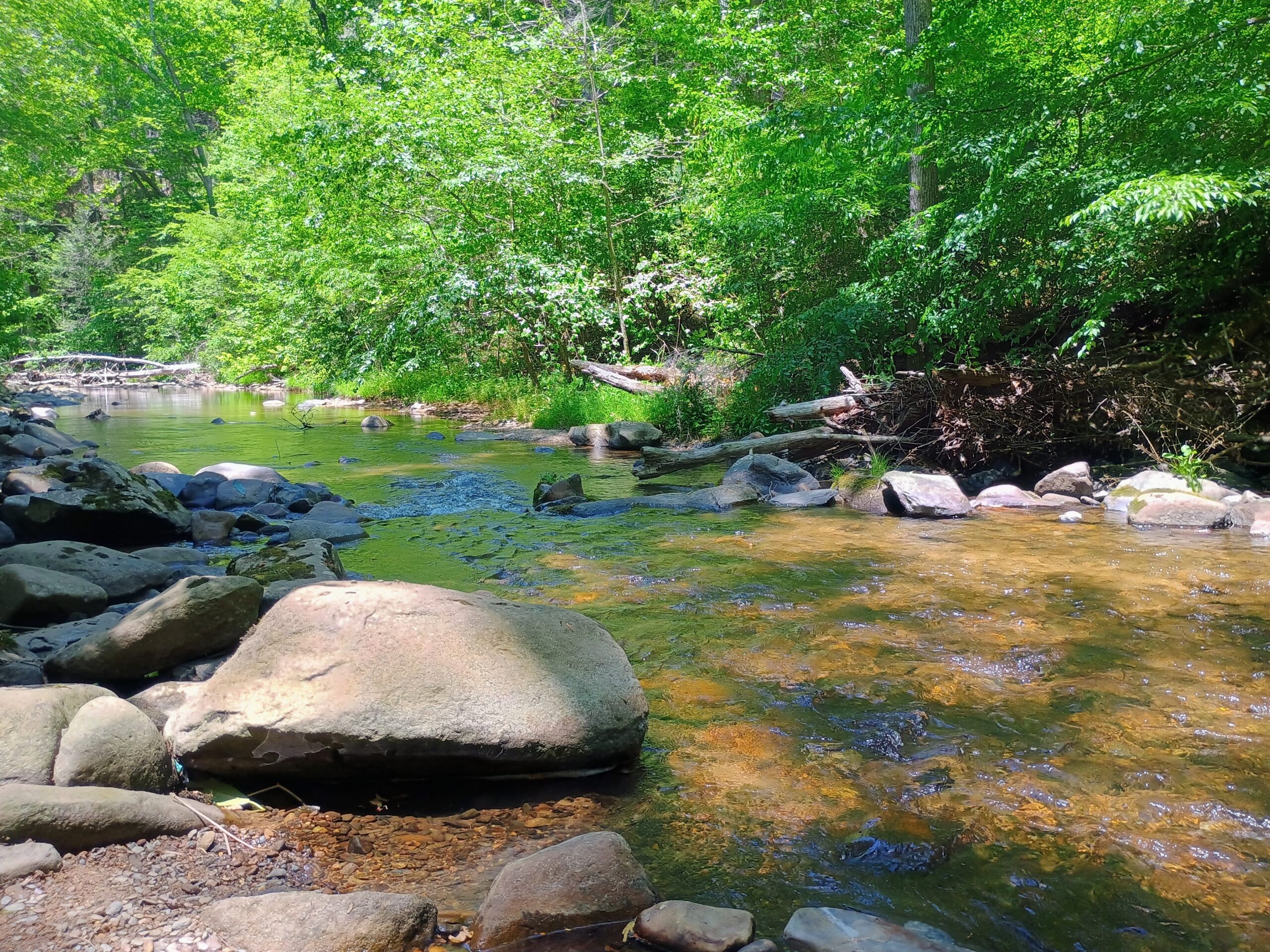
What Is the Purpose of a Retention Pond?
The purpose of a retention pond is to capture stormwater runoff and slowly release it back into nearby creeks and rivers over time. Without retention ponds, large amounts of rainwater from neighborhoods, roads, parking lots, and commercial developments would rush directly into natural waterways, causing flooding, erosion, infrastructure damage, and environmental harm.
Retention ponds are engineered stormwater systems designed to protect both people and nature by controlling how water moves after heavy rain.
Why Retention Ponds Are More Important Than Ever
As more houses, roads, parking lots, and commercial buildings are constructed, less natural soil remains available to absorb rainwater.
In natural environments, the ground absorbs a large portion of rainfall. But when areas become developed with pavement, rooftops, and infrastructure, rainwater can no longer soak into the soil properly.
Instead, huge amounts of water rapidly run across hard surfaces and flow into storm drains, creeks, and rivers.
Without stormwater management systems like retention ponds, this sudden surge of water can:
- Cause creeks and rivers to overflow
- Create severe erosion
- Wash out roads and bridges
- Damage infrastructure
- Carry large amounts of mud and sediment downstream
- Harm fish and wildlife habitats
Retention ponds are designed to slow all of this down.
How a Retention Pond Works
A retention pond acts like a temporary holding area for stormwater.
During heavy rain:
- Water flows from neighborhoods, roads, parking lots, or developments into the pond
- The pond captures and stores the sudden rush of water
- The water is then slowly released through engineered drainage structures
- The nearby creek or river receives the water gradually instead of all at once
The water still eventually returns to nature — just at a controlled rate.
This controlled release is critical for protecting streams, reducing erosion, and preventing downstream flooding.
A Real Example: Hurricane Helene
A powerful example of why stormwater control matters was Hurricane Helene.
During the storm, rivers and creeks rose dramatically, causing:
- Major flooding
- Road washouts
- Bridge damage
- Severe erosion
- Infrastructure failures
- Long recovery times for communities
Events like this show exactly why properly functioning stormwater systems are essential.
When massive amounts of water enter creeks too quickly, the damage can be catastrophic.
Retention ponds help reduce that impact by slowing down and managing water flow before it reaches natural waterways.
Retention Ponds Are Engineered Systems
Many people think retention ponds are simply large grassy areas that occasionally need mowing.
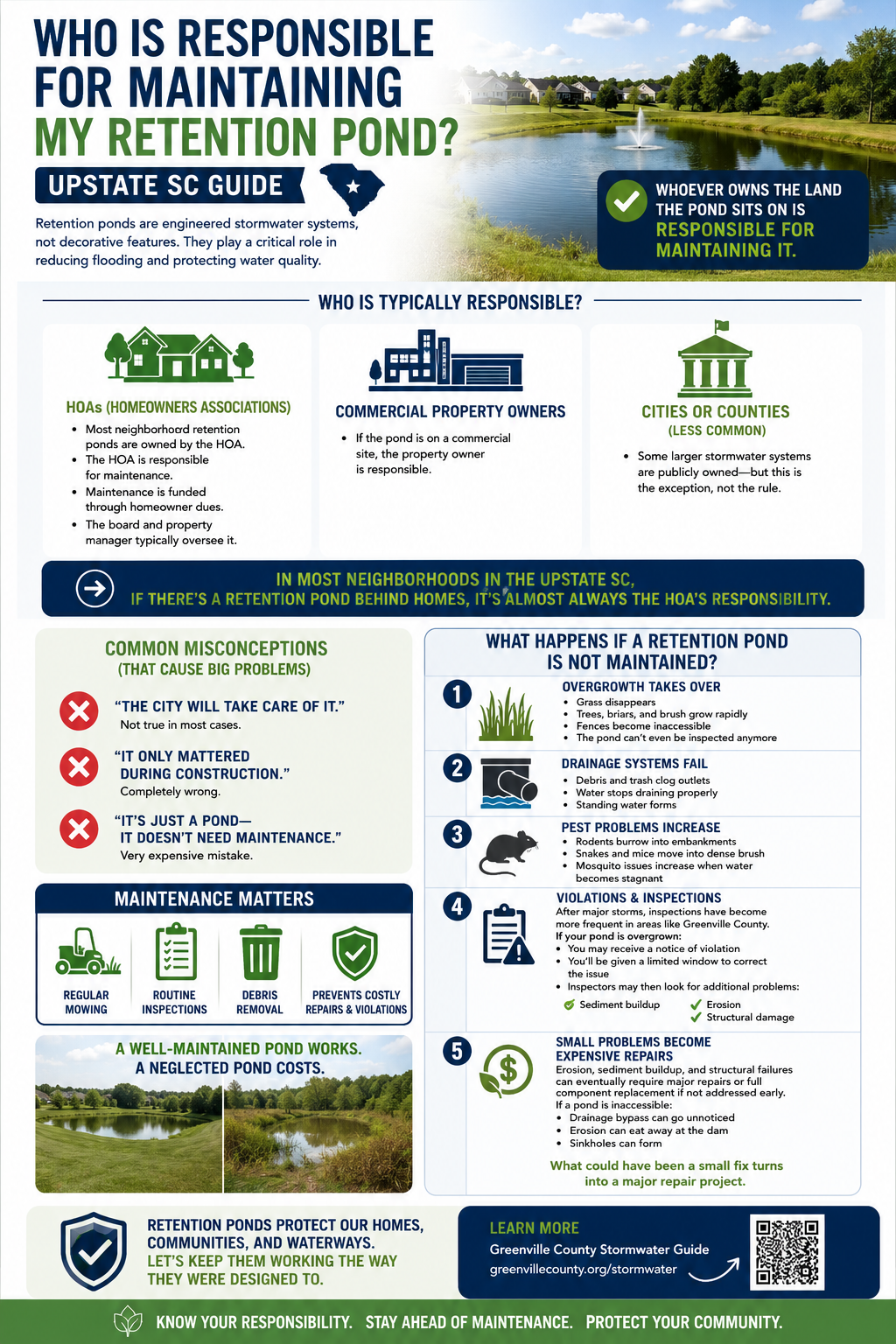
In reality, retention ponds are engineered systems with critical components that must function properly during storms.
These systems often include:
- Drain structures
- Overflow systems
- Riprap areas
- Emergency spillways
- Embankments
- Pipes and outlet structures
If these components become clogged, eroded, damaged, or inaccessible due to overgrowth, the pond may no longer function as designed.
That is why regular maintenance and inspections are so important.
Why Retention Pond Maintenance Matters
At MaxSlope, we specialize in the maintenance side of retention ponds.
Our job is to keep these systems:
- Accessible
- Inspectable
- Functional
- Safe to maintain
- Free of excessive overgrowth and debris
Regular maintenance helps prevent:
- Blocked drains
- Hidden erosion
- Animal burrows
- Drainage failures
- Structural damage
- Excessive vegetation growth
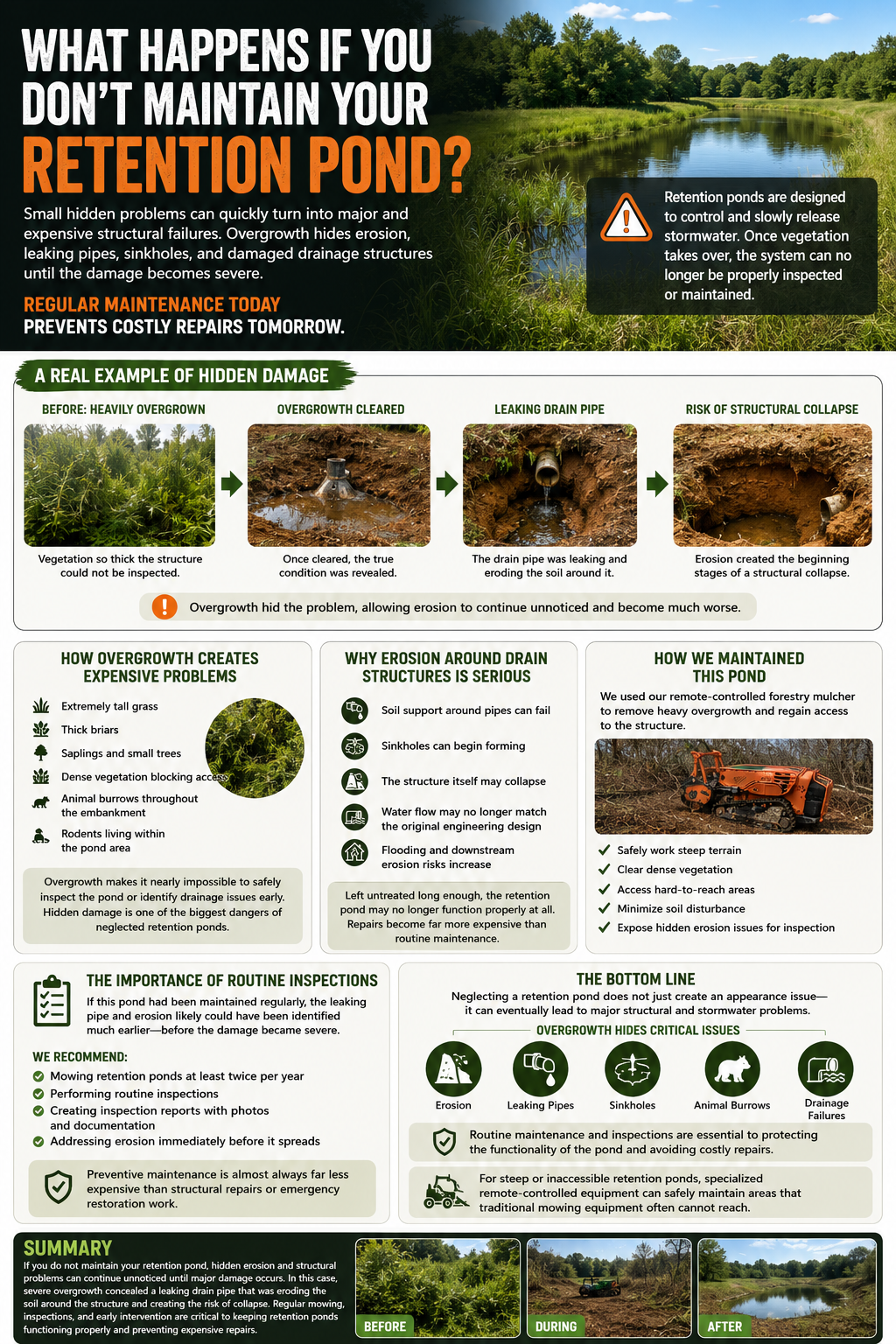
Overgrown retention ponds often hide serious issues that cannot be seen until the vegetation is cleared.
This is why retention pond maintenance requires much more than standard lawn care.
You can learn more about our retention pond maintenance services and how specialized equipment helps safely maintain steep and difficult terrain.
A Real Retention Pond Maintenance Example
One example is a retention pond we maintained in Simpsonville, South Carolina.
The pond had become heavily overgrown, making it difficult to inspect and access the drainage structures properly.
Our team:
- Cleared heavy brush
- Opened access to the drains
- Restored visibility around critical structures
- Removed vegetation interfering with the system
Since then, the pond has continued functioning properly and remains much easier to inspect and maintain.
Why Specialized Equipment Matters
Retention ponds are often built with steep slopes, soft ground, and difficult terrain that traditional mowing equipment cannot safely handle.
Using the wrong equipment can:
- Increase erosion
- Damage embankments
- Create unsafe working conditions
- Disturb soil unnecessarily
That is why specialized contractors use equipment specifically designed for steep slope and stormwater maintenance.
Remote-controlled slope mowers and forestry mulchers allow retention ponds to be maintained:
- More safely
- More efficiently
- With reduced soil disturbance
- While protecting the integrity of the pond
The Bottom Line
Retention ponds exist to protect communities, infrastructure, creeks, and wildlife from uncontrolled stormwater runoff.
As development increases, these systems become even more important.
But retention ponds only work properly when they are maintained and inspected regularly.
A neglected retention pond can quickly become overgrown, inaccessible, and unable to function as designed during heavy storms.
Summary
The purpose of a retention pond is to capture stormwater runoff and slowly release it into nearby creeks and rivers to reduce flooding, erosion, and environmental damage. These ponds are engineered systems with critical drainage components that require regular mowing, inspections, debris removal, and maintenance to function properly. Professional retention pond maintenance helps protect infrastructure, waterways, and communities during heavy rain events.

Leave A Comment