Why Traditional Mowers Struggle on Steep Slopes — and What Works Better
Maintaining grass and vegetation on steep slopes can be challenging, expensive, and potentially dangerous. Whether it’s a retention pond embankment, roadside ditch, commercial property, or dam, conventional mowing equipment often struggles when the terrain becomes too steep, uneven, or difficult to access.
For property managers, homeowners associations (HOAs), and commercial property owners throughout Greenville, Spartanburg, and Upstate South Carolina, finding a safe and effective way to maintain these areas can be a recurring challenge.
Fortunately, specialized remote-controlled steep slope mowing equipment offers a practical alternative to traditional mowing methods.
Why Traditional Lawn Mowers Struggle on Steep Slopes
Most conventional riding mowers and zero-turn mowers are designed primarily for relatively level, maintained terrain. Although some machines can operate on moderate inclines, steep embankments introduce several challenges.
1. Increased Risk of Rollovers and Loss of Control
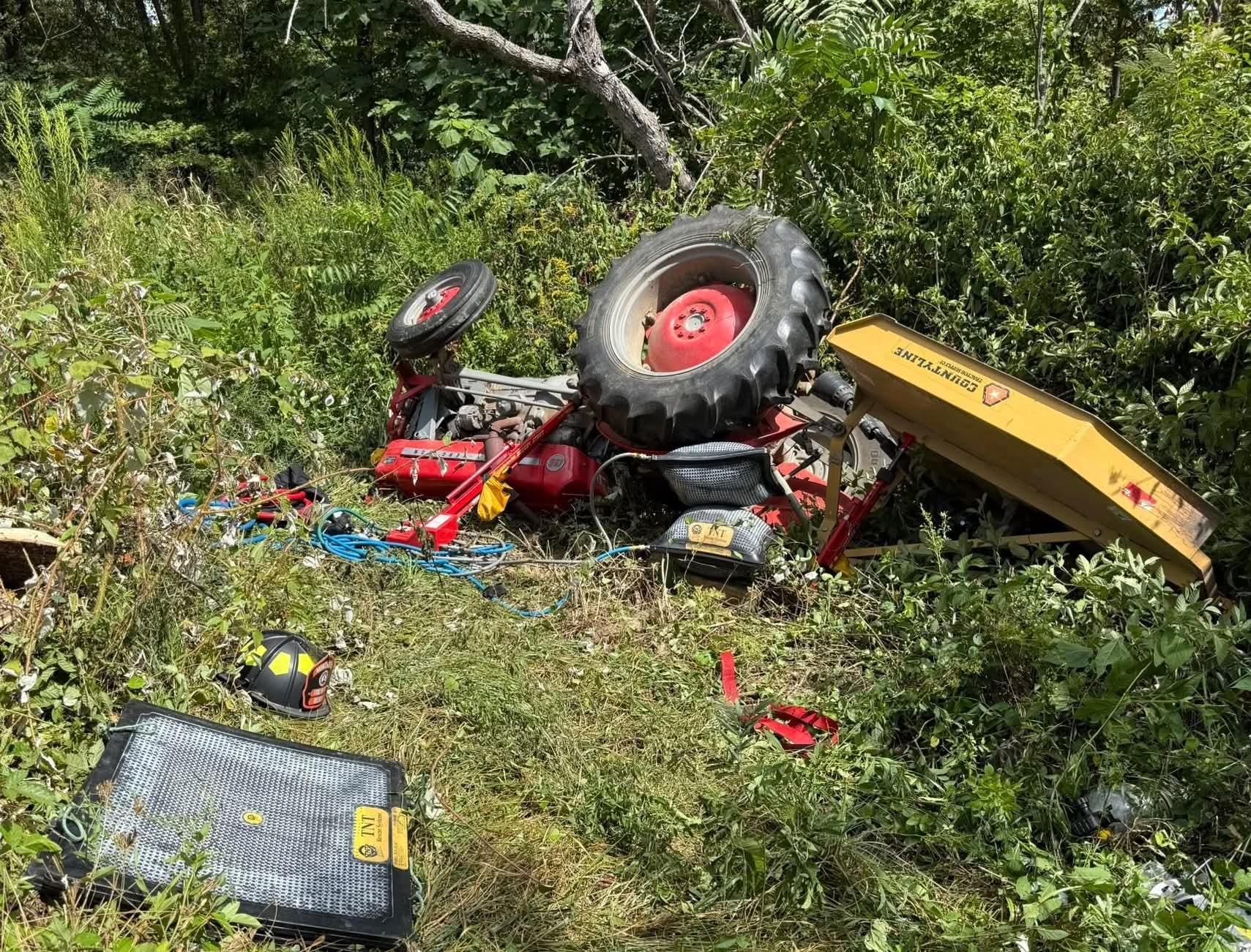
One of the biggest concerns when mowing steep slopes is equipment stability.
As the slope increases, the risk of sliding, losing traction, or overturning becomes greater. Wet grass, loose soil, and uneven ground can make these conditions even more hazardous.
Zero-turn mowers can be particularly difficult to control when operating across steep hillsides. Their manufacturer-specified slope limits must be respected, and many conventional riding mowers are not approved for slopes exceeding 15 degrees.
This creates a problem for properties with steep retention pond banks, drainage channels, and roadside embankments.
2. Poor Traction on Wet or Uneven Ground
Steep slopes frequently have challenging ground conditions.
Retention ponds and stormwater facilities, for example, often contain areas with soft soil, wet grass, and uneven surfaces.
Traditional wheeled equipment can lose traction, slide downhill, or become stuck. Even when the slope itself is manageable, ground conditions may prevent conventional equipment from operating safely.
3. Limited Access to Difficult Terrain
Many steep slopes are located in areas that are difficult to reach with conventional equipment.
Common examples include:
- Retention and detention pond embankments
- Roadside ditches and highway slopes
- Stormwater drainage channels
- Industrial and commercial properties
- Dam embankments
- Overgrown areas with uneven terrain
Fences, narrow access points, drainage structures, and soft ground can make these locations even more difficult to maintain.
In some situations, contractors must resort to handheld string trimmers or brush cutters, significantly increasing the labor required.
4. Higher Labor Costs and Longer Maintenance Times
When riding mowers cannot safely access a slope, maintenance often becomes a manual operation.
Workers may spend hours using string trimmers and handheld brush cutters on steep terrain. This work can be physically demanding, time-consuming, and difficult to perform consistently.
For HOAs and commercial property managers responsible for large retention ponds or extensive embankments, manual maintenance can become a significant recurring expense.
What Works Better? Remote-Controlled Steep Slope Mowing
Specialized remote-controlled slope mowers are designed to operate on terrain that conventional mowing equipment cannot safely handle.
Unlike traditional riding mowers, these machines are operated remotely, allowing the operator to remain at a safer location away from the machine.
At MaxSlope LLC, we use specialized tracked, remote-controlled mowing equipment designed for demanding terrain.
Our Green Climber slope mower is capable of operating on slopes up to approximately 50 degrees under suitable conditions, significantly steeper than the operating limits of most conventional riding mowers.
Actual operating limits depend on ground conditions, traction, obstacles, machine configuration, and manufacturer guidance.
Improved Operator Safety
One of the biggest advantages of remote-controlled mowing is that the operator does not need to ride on the machine.
Instead, the operator controls the equipment from a suitable position with visibility of the work area.
This reduces the operator’s exposure to rollover hazards associated with riding conventional equipment on steep slopes.
Tracked Equipment for Better Traction
Unlike conventional wheeled lawn mowers, specialized tracked slope mowers distribute their weight over a larger contact area.
This can improve traction and reduce ground pressure, particularly on uneven terrain.
The tracked design also helps the machine navigate difficult slopes and areas where traditional wheeled equipment may struggle.
However, saturated soil and unstable ground still require careful assessment before work begins.
Efficient Maintenance of Large Embankments
Remote-controlled mowing equipment can make it practical to mechanically maintain areas that would otherwise require extensive manual trimming.
For commercial properties with large retention ponds, drainage systems, or steep banks, this can significantly reduce the amount of labor needed for routine vegetation maintenance.
The result is a more practical and consistent approach to maintaining difficult terrain.
Why Retention Ponds Are Particularly Challenging
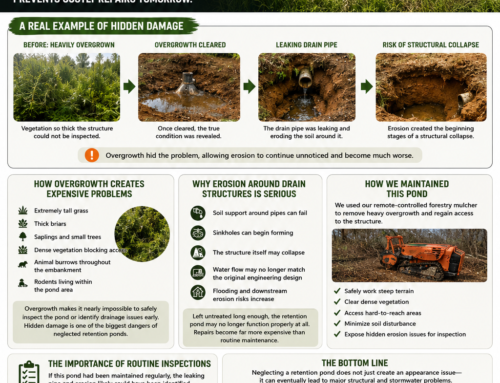
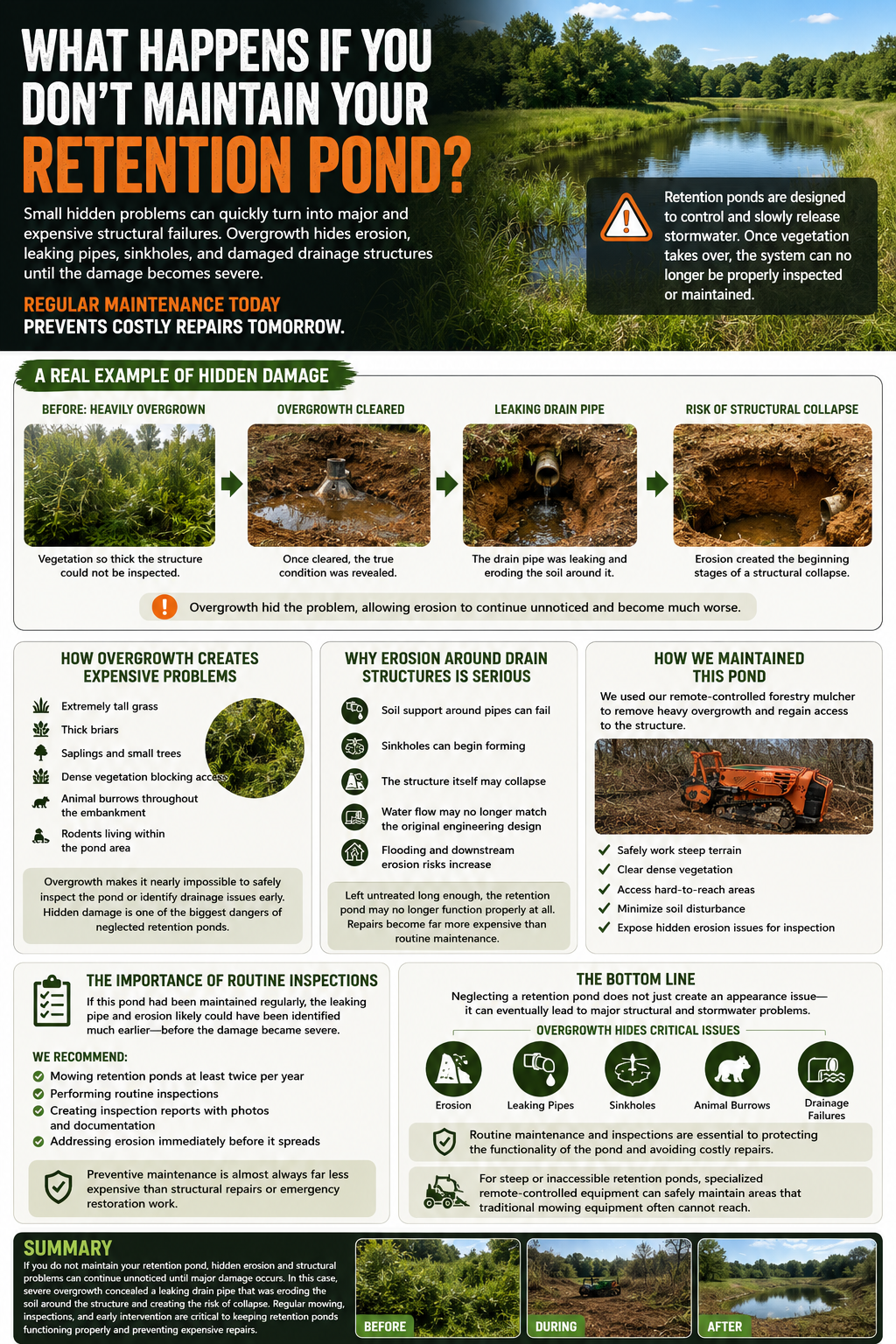
Retention and detention ponds are among the most common examples of properties where steep slope mowing becomes a challenge.
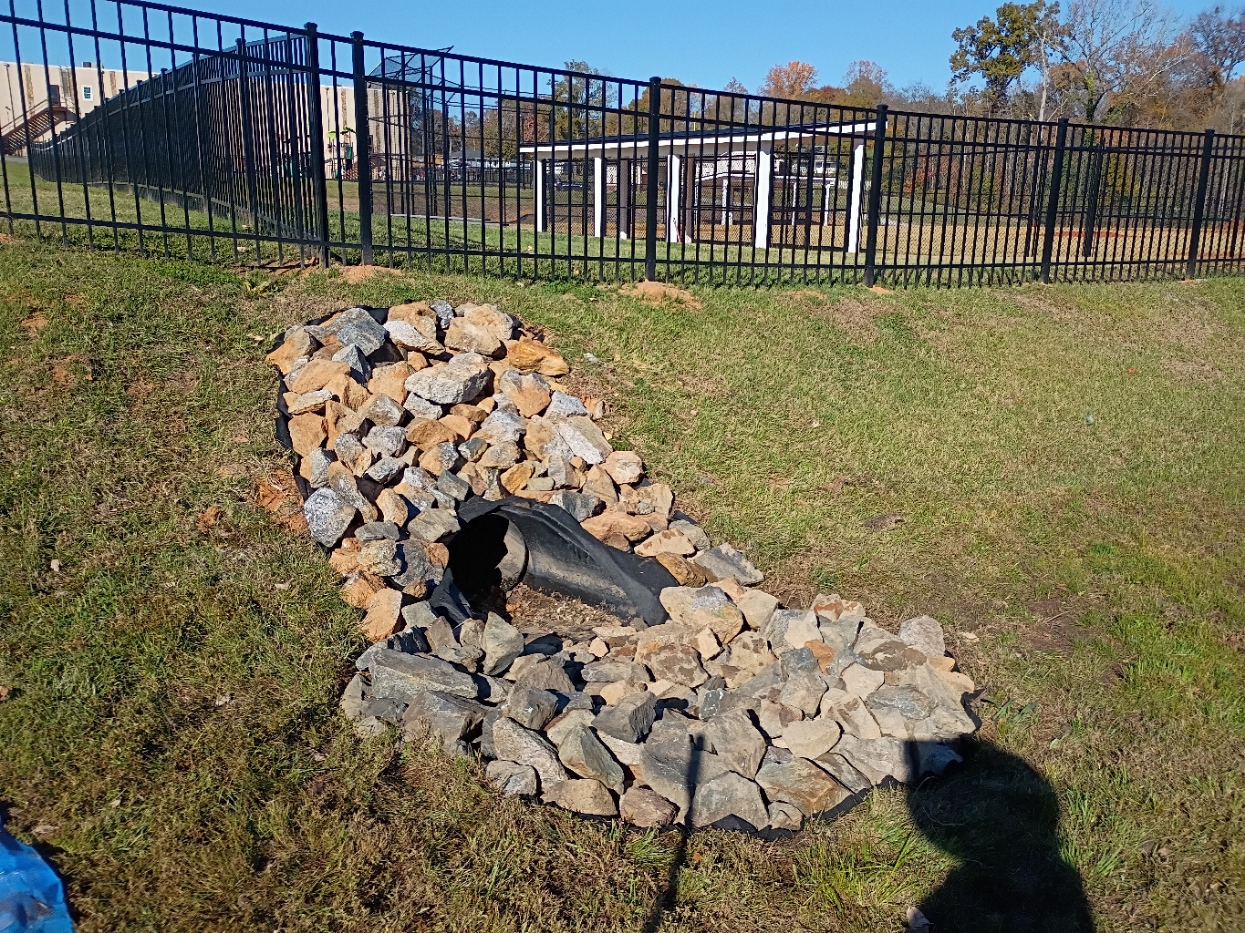
These stormwater management facilities often feature steep embankments, uneven ground, drainage structures, and areas that remain wet long after rainfall.
Routine vegetation maintenance helps keep drainage structures accessible, allows easier inspection of embankments, and prevents excessive vegetation growth.
When these areas are neglected, grass, brush, and woody vegetation can become increasingly difficult to control.
For HOAs, apartment complexes, industrial facilities, and commercial developments, establishing a regular maintenance schedule is often more cost-effective than allowing vegetation to become severely overgrown.
Learn more about our retention pond maintenance services in Greenville and Upstate South Carolina.
What About Slopes That Are Already Overgrown?
Routine mowing equipment works best when vegetation is maintained regularly.
However, some slopes have been neglected for years and may contain dense brush, vines, saplings, and woody vegetation.
In these situations, conventional mowing may no longer be sufficient.
Specialized remote-controlled forestry mulching equipment can provide another solution.
At MaxSlope, we offer both steep slope mowing and forestry mulching services, allowing us to address a wide range of vegetation conditions.
Once an overgrown area has been cleared, a recurring mowing schedule can help prevent the vegetation from becoming difficult to manage again.
Steep Slope Mowing in Greenville, Spartanburg, and Upstate South Carolina
Every property presents different challenges. The safest and most effective maintenance method depends on slope angle, ground conditions, vegetation density, accessibility, and the surrounding environment.
At MaxSlope LLC, we specialize in maintaining steep and difficult terrain using remote-controlled equipment.
Our services include:
- Steep slope mowing
- Retention and detention pond maintenance
- Remote-controlled brush clearing
- Forestry mulching
- Commercial embankment and drainage area maintenance
We serve Greenville, Spartanburg, Greer, Anderson, Simpsonville, and surrounding communities throughout Upstate South Carolina.
Need Help Maintaining a Steep Slope?
If your property has steep embankments, overgrown retention ponds, or areas that conventional mowing contractors cannot safely access, specialized equipment may offer a better solution.
MaxSlope LLC provides professional remote-controlled slope mowing and vegetation management for commercial properties, HOAs, industrial facilities, and private landowners.
Visit www.maxslope.com to learn more or schedule a site visit.
MaxSlope LLC — Safe, remote-controlled solutions for difficult terrain across Upstate South Carolina.

Leave A Comment