
Retention Pond Inlet Riprap Restoration in Charlotte, NC
How MaxSlope restored a sediment-filled stormwater dissipator pad without replacing the existing riprap.
Retention ponds play an important role in managing stormwater runoff, particularly around commercial properties, schools, and newly developed sites. However, the drainage structures feeding these ponds require regular maintenance to function as intended.
MaxSlope LLC recently completed a riprap dissipator pad restoration at a private school in Charlotte, North Carolina, where years of accumulated sediment and vegetation had significantly reduced the effectiveness of the stormwater inlet.
By carefully removing sediment, cleaning and reusing the existing riprap, and installing new geotextile fabric, we restored the dissipator pad in just one day.
The Problem: Sediment and Vegetation Had Buried the Riprap
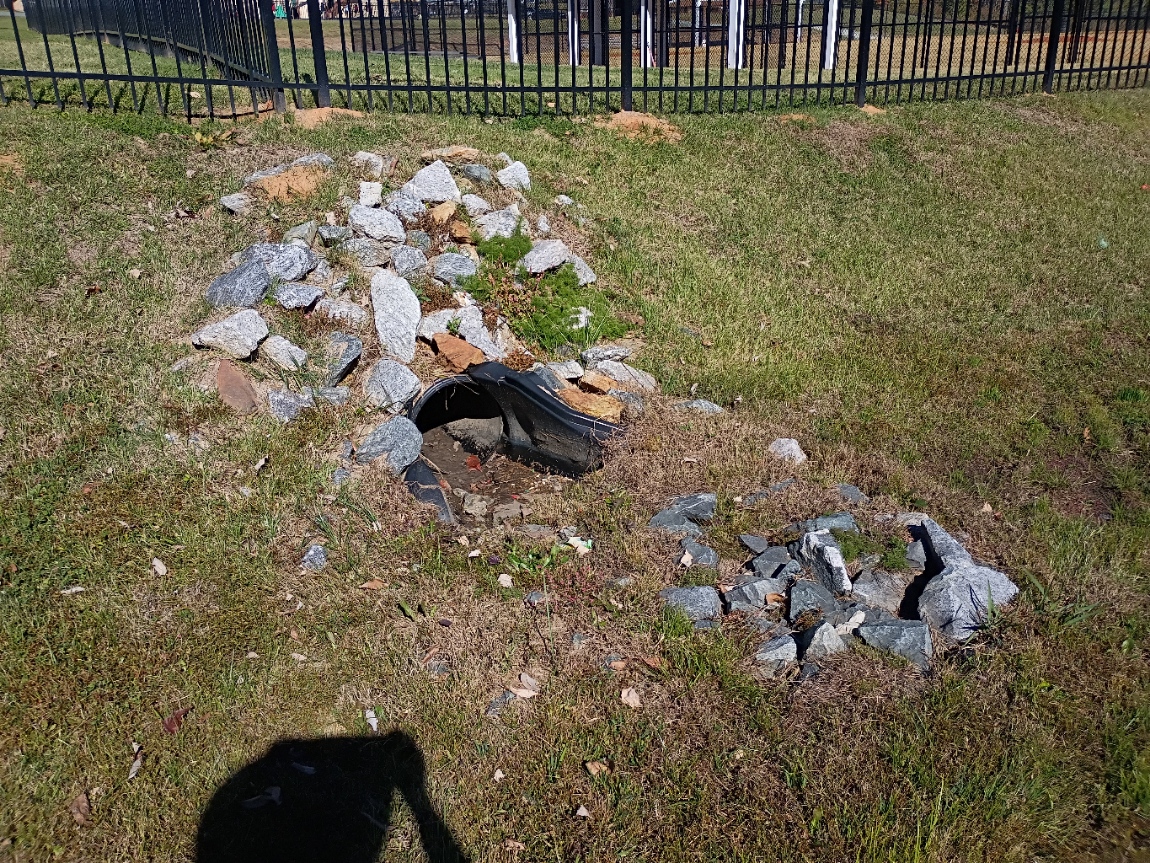
The retention pond featured a 24-inch stormwater inlet pipe with a flared end section (FES) discharging onto a riprap energy dissipator pad measuring approximately 6 feet by 8 feet.
Over approximately two years, an estimated half ton of sediment had accumulated around and between the rocks.
Much of this sediment likely originated during the property’s construction phase, before grass and other vegetation had become established across the surrounding drainage areas.
As sediment accumulated, grass and vegetation began growing between the riprap stones. Eventually, much of the stone was buried beneath soil and vegetation.
Instead of flowing across an exposed bed of riprap designed to dissipate energy, incoming stormwater was passing over the sediment-filled, vegetated surface.
Left unaddressed, these conditions can reduce the effectiveness of erosion protection and increase maintenance requirements.
Step 1: Removing and Cleaning the Existing Riprap
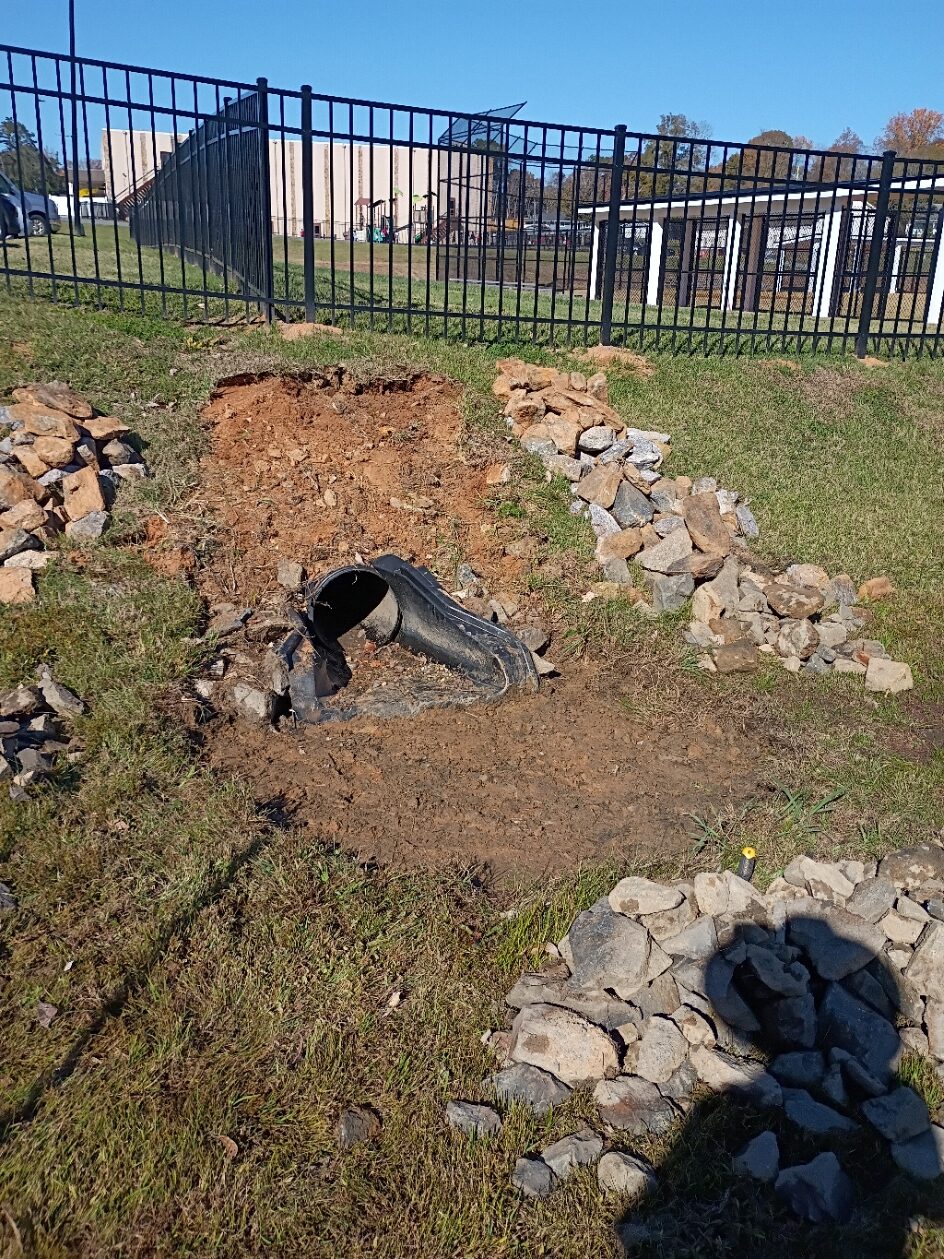
Our first step was to carefully remove all the existing riprap stones from the dissipator pad.
Rather than immediately replacing the material, we inspected and cleaned the rocks, removing accumulated soil, sediment, and organic debris.
Fortunately, the existing riprap was still in good condition, and there was enough material on-site to rebuild the dissipator pad without purchasing additional stone.
Reusing the existing riprap helped keep restoration costs down while reducing the need to transport additional materials to the property.
Step 2: Removing Accumulated Sediment and Vegetation
With the rocks removed, we excavated the accumulated sediment and removed the grass and vegetation that had established itself within the dissipator pad.
Approximately half a ton of accumulated material was removed during the restoration.
One of the biggest challenges was the soft, wet ground surrounding the inlet.
Because the retention pond bottom already had established grass, we wanted to avoid unnecessary damage from heavy equipment.
For that reason, we performed most of the restoration using hand tools, allowing us to work precisely without disturbing the surrounding vegetation.
All removed sediment, vegetation, and debris were collected and hauled away from the property.
Step 3: Installing New Nonwoven Geotextile Fabric
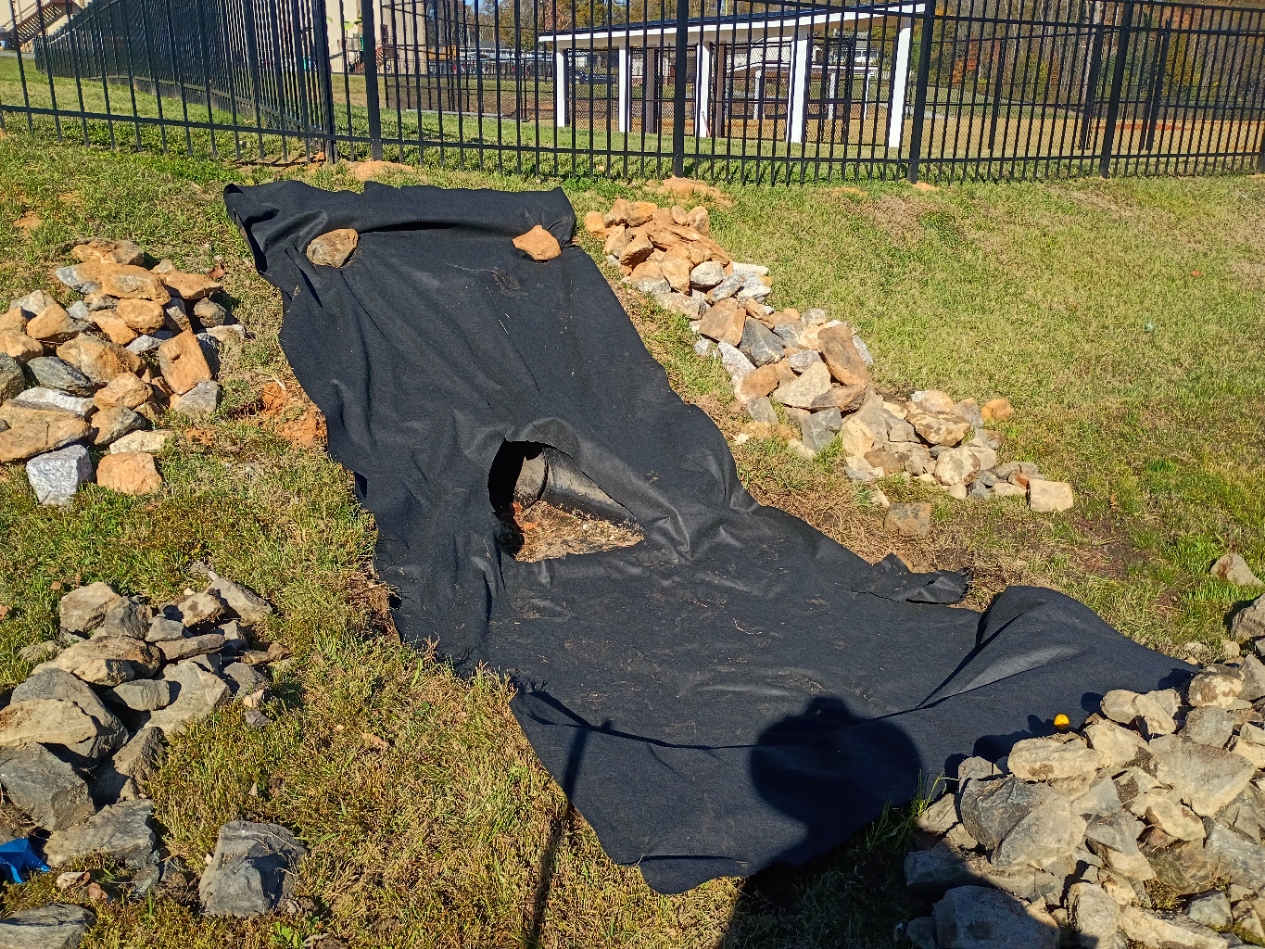
Once the area was cleaned and prepared, we installed new nonwoven geotextile landscape fabric beneath the riprap.
This fabric provides an important separation and filtration layer between the underlying soil and the stone.
Properly selected and installed geotextile helps prevent soil particles from migrating into the riprap while allowing water to pass through.
This helps preserve the effectiveness of the dissipator pad and reduces the potential for future vegetation growth through the stone layer.
Step 4: Reinstalling the Riprap Energy Dissipator Pad
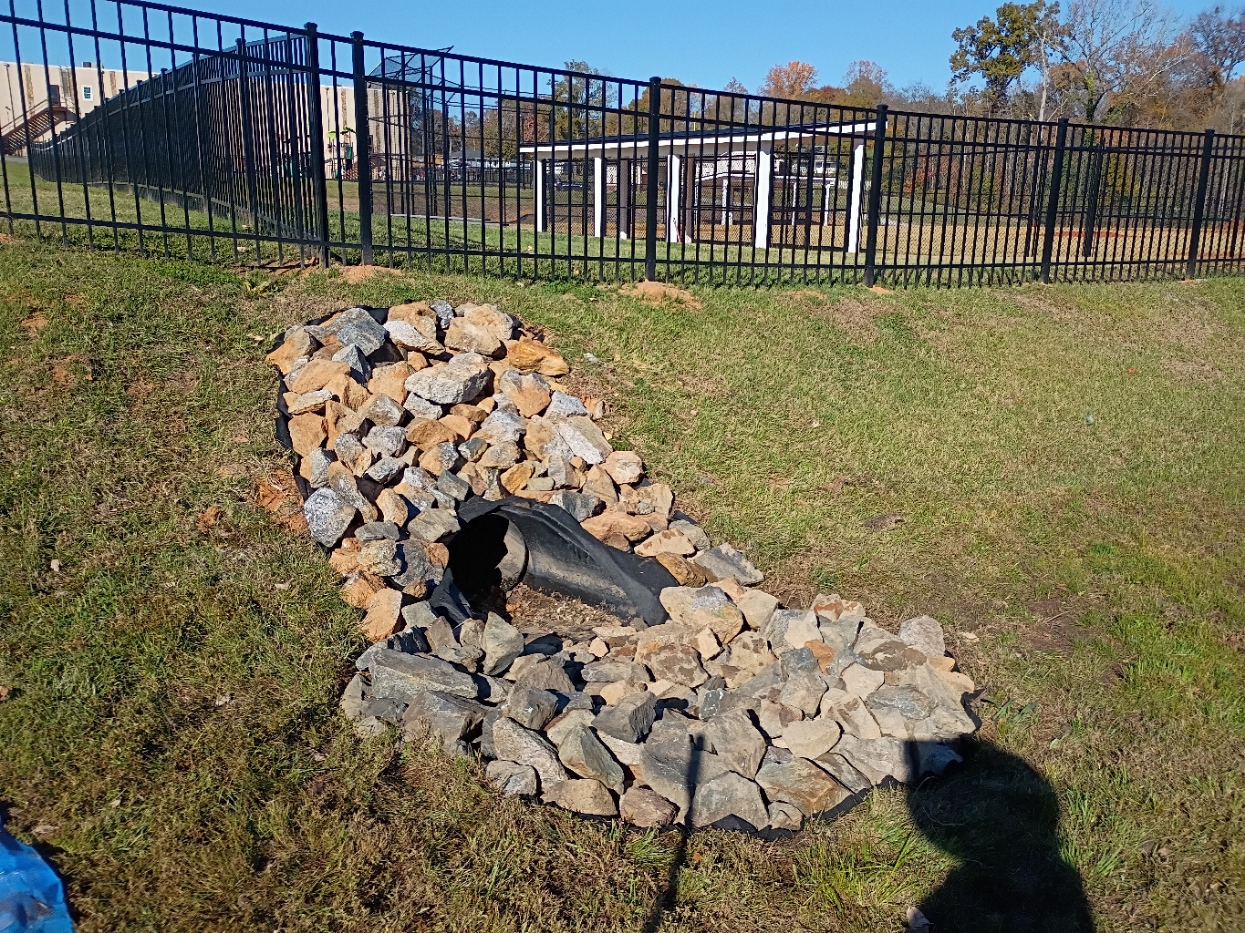
After preparing the base, we carefully repositioned the cleaned riprap stones to restore the approximately 6-by-8-foot dissipator pad.
The finished result was a dramatic improvement.
Where the inlet had previously been surrounded by sediment and overgrown grass, the restored pad now featured a clearly exposed layer of riprap.
The stone could once again perform its intended function: helping slow and disperse stormwater discharged from the 24-inch inlet pipe and reducing the potential for erosion.
The restored stone surface also makes future inspections and vegetation maintenance easier.
The Result: A Restored Dissipator Pad in Just One Day
The entire restoration was completed in a single day.
By the end of the project:
- Approximately half a ton of accumulated sediment and debris had been removed.
- All existing riprap had been recovered, cleaned, and reused.
- New nonwoven geotextile fabric had been installed.
- The dissipator pad had been restored to a clean, functional condition.
- The surrounding grass and pond bottom remained largely undisturbed.
- All excavated material and debris had been hauled off-site.
The before-and-after transformation was significant, and we left the property clean and tidy.
Most importantly, the restoration allowed the existing stormwater infrastructure to function as intended without requiring a complete replacement.
Does Your Retention Pond Dissipator Pad Need Additional Riprap?
Not every dissipator pad can be restored using existing materials.
In cases where stone has washed away, deteriorated, or is insufficient to provide proper coverage, additional riprap may be required.
For many of the smaller stormwater inlet restoration projects we encounter, approximately 2–5 tons of additional riprap may be needed, depending on the size and condition of the pad.
Class B riprap is one material we



Leave A Comment